HST Management

CASE STUDY / BRAND STRATEGY & REBRANDING

HST Management

Rebuilding a brand around the business it aspired to become

HST Management was preparing for its next stage of growth. The business already had decades of industrial experience, international projects and substantial technical capability — but its identity and communication had yet to reflect that level of ambition.I helped develop a strategy-led rebrand connecting positioning, identity, content and commercial marketing.

01 / Context

From industrial service provider to execution partner

The brand needed to catch up with the company’s ambitions.

HST already had decades of experience, international projects, technical expertise and a broad service portfolio. The problem was that these strengths did not add up to a clear market position.The existing website presented services and company information but lacked a strong decision-maker journey, while communication demonstrated activity without establishing a sufficiently distinctive professional position.At the same time, the company was exploring a more sophisticated commercial model aimed at higher-value industrial clients.


BUSINESS


10+ years of industrial experience, international projects, technical expertise and turnkey capability.

BRAND GAP


The company’s capabilities and performance were stronger than the identity and communication representing them.

AMBITION


Build the commercial and marketing foundations expected of a more internationally positioned project execution partner.

MY ROLE


Research, strategy and creative direction across the rebrand

Reporting directly to the CEO, I worked on the project from research and strategic development through creative direction and implementation.The work connected what HST wanted to become with a position it could credibly own — and then translated that position into identity, communication and commercial marketing.


02 / DISCOVERY

Understand the brand before reinventing it

The project began with an internal investigation. I spoke with company leadership to understand what HST wanted to become, which capabilities they considered most important, and what kinds of clients and projects the company wanted to attract.I then tested those ambitions against the existing brand, website, communication and competitive environment.


INTERNAL AMBITION

What does management believe HST is today — and what should it become?


BRAND REALITY

Is there a compelling story behind the facts?


MARKET SPACE

Where is the credible position between local technical providers and distant global engineering groups?


OPPORTUNITY

What is our angle?

03 / POSITIONING

Finding the idea behind the brand

CATEGORY

International industrial project execution partner

CUSTOMER PROBLEM

Critical projects cannot be allowed to fail.

CORE VALUE

Execution certainty and reduced project risk.

CORE IDEA

Execution is the product.

04 / IDENTITY

Turning strategy into identity.

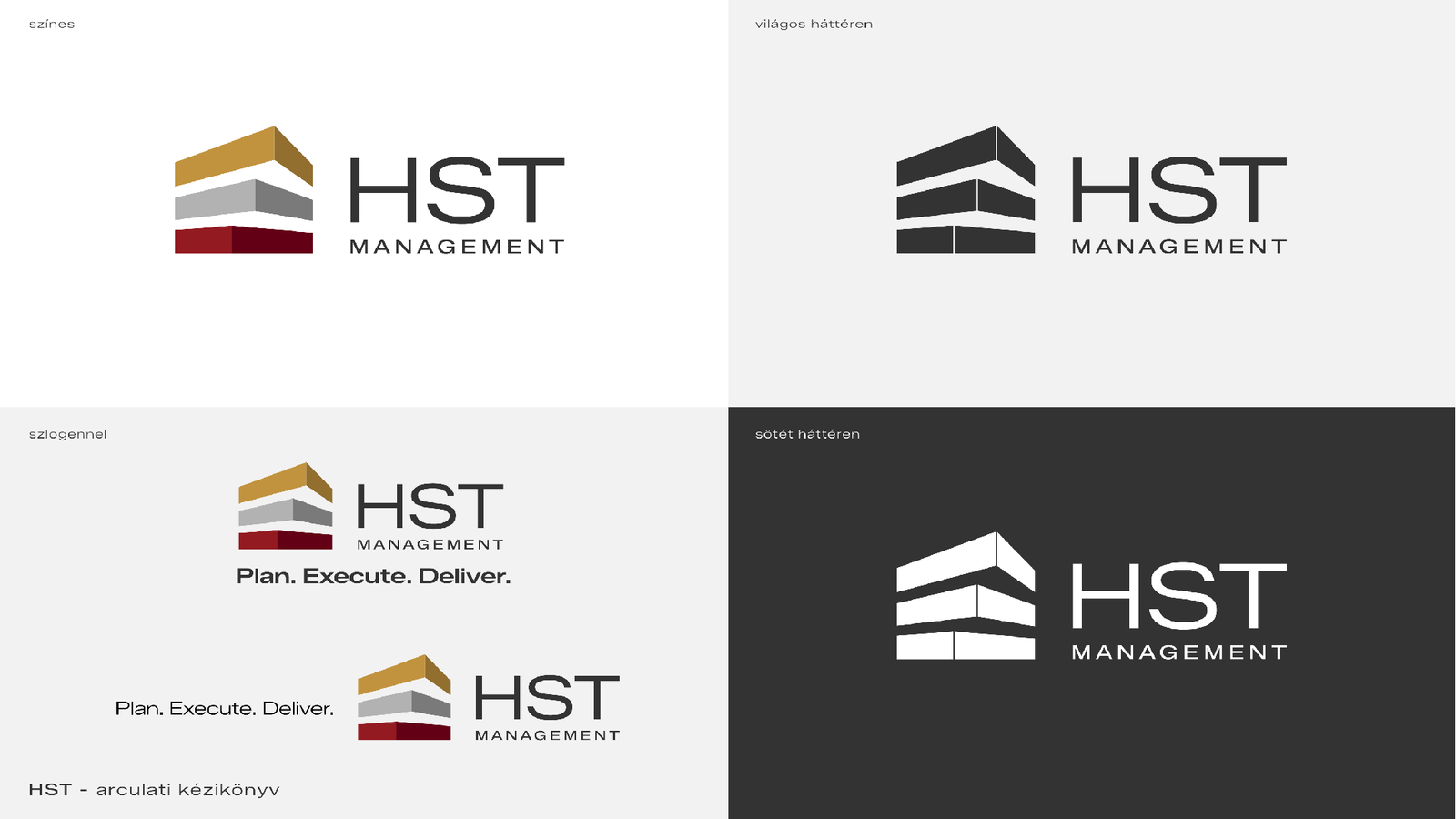
Once the strategic foundation was established, the next task was translating it into a visual identity. The objective was not simply to modernise the existing brand. The identity needed to communicate control, precision, technical competence, responsibility and confidence. I developed the initial concept behind the new logo and visual direction, which was then refined and professionally executed in collaboration with an external graphic designer.

Core Directive

PLAN. EXECUTE. DELIVER.


A disciplined visual language for a higher-value position.

The finished system preserved recognisable HST equity while adding hierarchy and restraint: graphite and neutral corporate tones, controlled red and gold accents, disciplined typography and geometric brand elements.

Visual System Parameters

SECTION 05 / DIGITAL APPLICATION

Making the brand work beyond the logo.

A rebrand only becomes useful if it changes how the company communicates. We translate strategic intent into dynamic, high-fidelity interactive systems built to engage modern platforms and scale infinitely.


01 / PLAN

Frame the business

Establish core structural paradigms, interaction patterns, and user flow architectures prior to visual implementation.

02 / EXECUTE

Show responsibility

Optimize accessibility standards and technical responsiveness while crafting fluid components tailored to target behaviors.

03 / DELIVER

Prove the outcome

Validate performance markers through usability mapping, deployment testing, and strategic launch integration.


* This part of the broader transformation maps high-value interaction patterns directly to core systemic execution.
Section 06 / COMMERCIAL MODEL

Rethinking marketing for a high-value B2B business.

The research also challenged the existing approach, prompting a decisive migration from high-volume programmatic tactics to structured strategic engagement. High-value B2B relationships demand orchestrated, multi-touch coordination across highly sophisticated purchasing committees where trust must be established long before the transaction.

“Inbound makes outbound safe. Outbound gives inbound meaning.”


The 3-Tier ABM Framework

White-Glove ABM

1:1 highly bespoke campaigns built exclusively for marquee high-yield enterprise accounts. Involves custom solutions development and deep executive alignment.

Focused ABM

1:few clusters grouped by shared structural challenges, industry verticals, or technological requirements. Focused on high-value business cases.

Market Presence

1:many programmatic awareness targeted at key accounts. Driven by real-time intent signaling and highly dynamic content distribution.


07 / SOCIAL STRATEGY

Building authority through expertise.

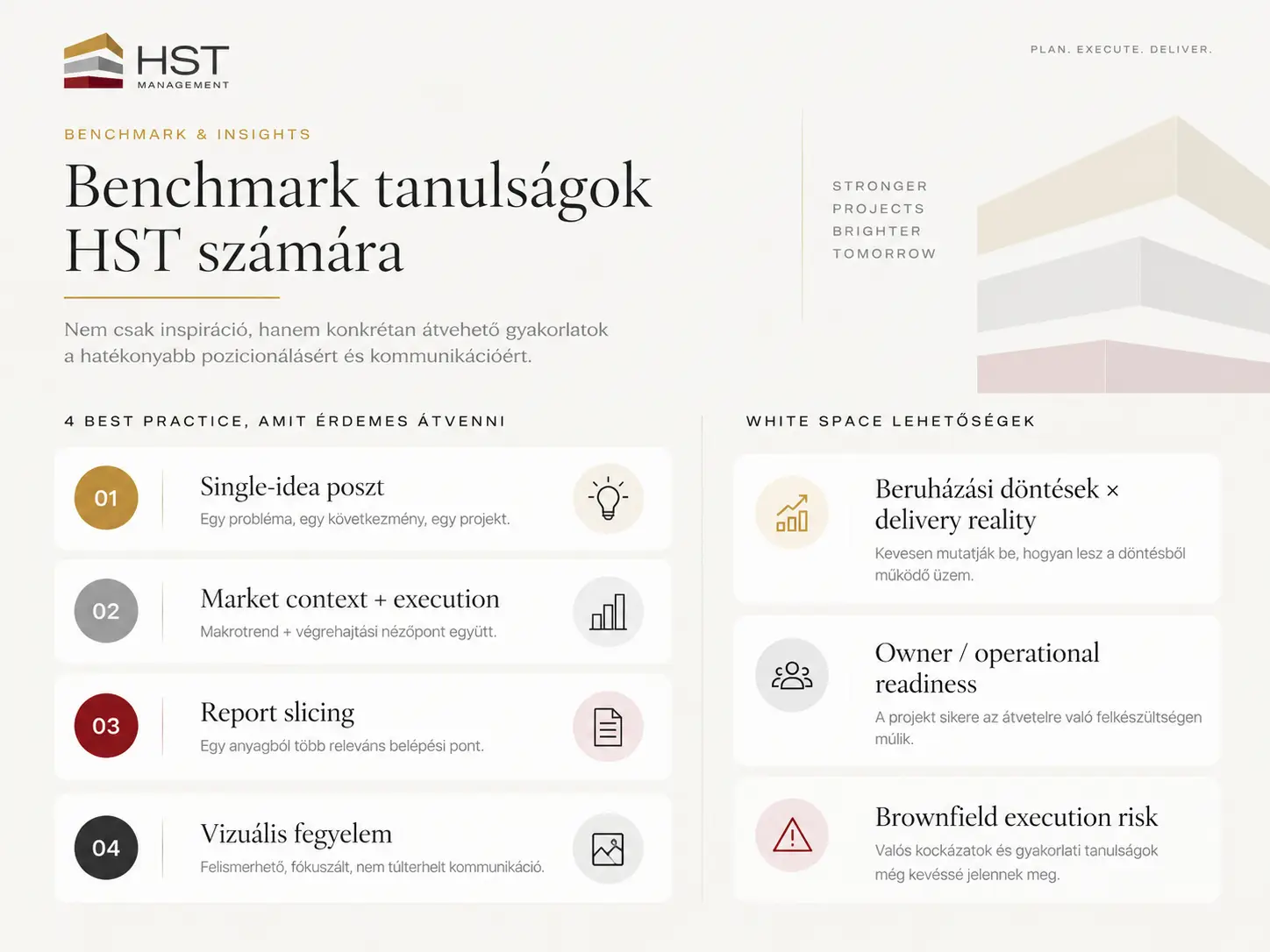
Rather than increasing the number of channels, the strategy concentrated primarily on LinkedIn and identified areas where HST could credibly contribute something its competitors were not communicating well enough.

A benchmark of ten engineering and project-delivery companies exposed communication opportunities around delivery reality, owner readiness, brownfield execution risk and organisational causes of project failure.


Editorial Framework Pillars

Pillar 01

Engineering Knowledge

Pillar 02

Project Lessons

Pillar 03

Industrial Myths

Pillar 04

Leadership Perspectives

Pillar 05

Investment Insights

Pillar 06

Industry Trends

The Strategic Intent

“The intention was to turn accumulated experience into communication that demonstrates expertise rather than repeatedly claiming it.”

08 / THOUGHT LEADERSHIP

From strategy to thought leadership.


One example was ‘The Changing Economics of Construction in a Warming World’. Rather than starting with HST services, the article begins with a wider business problem: climate change is changing construction economics, asset resilience and long-term investment quality.

It then connects embodied carbon, greenfield versus brownfield investment, procurement, resilience and commissioning back to a central HST territory: planning only creates value if execution can deliver it.

01

POSITIONING

02

CONTENT TERRITORY

03

RESEARCH

04

FINISHED COMMUNICATION

09 / MEASUREMENT

Turning activity into a channel diagnosis.


I included measurement as part of the system rather than treating content production as the endpoint. A 222-day LinkedIn performance review assessed organic visibility, validation behaviour, engagement quality, CTA activity and the next measurement layer required for ABM and commercial influence.

ORGANIC IMPRESSIONS
0
UNIQUE VISITORS
0
PAGE VIEWS
0
SPONSORED IMPRESSIONS
0

The useful question was not simply “did reach grow?”

The report deliberately separated visibility from commercial proof. The channel was becoming useful at awareness and validation level, but commercial impact could not yet be claimed.


Note: The report documented a clear organic reach increase after LinkedIn became a deliberate marketing channel, while remaining cautious about causality without post-level data.

OUTCOME

A brand system built around responsibility

The visual rebranding was implemented, and the resulting identity remains in use by HST. More importantly, the project created a coherent strategic foundation connecting the company’s business ambitions, positioning, messaging and visual identity.The strategy crystallised the brand around execution certainty and reduced project risk, supported by more than 30 years of experience, international projects, major industrial references, certified processes and turnkey capability.


A controlled, experienced partner capable of taking responsibility for complex industrial execution.


WHAT I TOOK FROM IT


A rebrand should be ta logical next step instead of a strategic starting point.


The HST identity was not designed first and rationalised afterwards. It emerged organically from deep strategic foundations—clarifying the core value proposition, interviewing stakeholders, and repositioning the firm’s legacy for a new generation. Design is simply the visible footprint of that strategic work.


That distinction is what turns an identity refresh into a rebrand.